A Call to the Church to Remember the Love, Mercy, and Truth of Jesus Christ Rooted in Faith — Living Holly Ranch & Nursery

“And why beholdest thou the mote that is in thy brother’s eye, but considerest not the beam that is in thine own eye?” — Matthew 7:3 (KJV)
There is something terribly wrong when a person walks toward the doors of a church hoping to find Jesus, only to turn around believing they are too sinful to be loved by Him.
And perhaps it’s time we stopped asking what’s wrong with the people who don’t come to church and started asking what’s wrong with the way we sometimes treat them.
This message isn’t written to attack the church. It’s written because the church matters. Because souls matter. Because the people we’ve hurt matter.
And because Jesus Christ deserves better from those of us who claim to follow Him.
The Hardest Person to Face
The hardest person for anybody to look at is themselves.
And sometimes the hardest thing isn’t looking in the mirror. It’s being honest about the person looking back.
James 1:23–24 (KJV): “For if any be a hearer of the word, and not a doer, he is like unto a man beholding his natural face in a glass:
For he beholdeth himself, and goeth his way, and straightway forgetteth what manner of man he was.”
How often have we done exactly that? We remember somebody else’s failure, somebody else’s weakness, somebody else’s sin — and yet walk away forgetting what God has shown us about our own hearts.
We are often quick to remember the sins of others and even quicker to forget our own.
That is exactly why Jesus warned us to remove the beam from our own eye first. Before we speak to the sinner across from us, we ought to let the Word of God speak to the sinner within us.
If the church is ever going to help a broken world, it must first be willing to stand honestly before the mirror of God’s truth.

The Beam in Our Own Eye
Jesus gave us a warning in Matthew 7:3–5 that should shake every Christian who has ever pointed a condemning finger at another human being.
Matthew 7:3–5 (KJV):
And why beholdest thou the mote that is in thy brother’s eye, but considerest not the beam that is in thine own eye?
Or how wilt thou say to thy brother, Let me pull out the mote out of thine eye; and, behold, a beam is in thine own eye?
Thou hypocrite, first cast out the beam out of thine own eye; and then shalt thou see clearly to cast out the mote out of thy brother’s eye.
Notice what Jesus said.
He didn’t say sin no longer matters. He didn’t say we should abandon truth or never correct someone.
He said FIRST remove the beam from your own eye.
Before you condemn the adulterer, examine your own faithfulness. Before you condemn the liar, remember the lies you’ve told. Before you condemn the person struggling with addiction, examine the things that have mastered your own life.
And before you condemn a gay man or woman, ask yourself whether you have obeyed Christ’s commandment to love your neighbor.
How many of us have been so busy inspecting the sins of others that we’ve stopped confessing our own? How many church members have polished their Sunday shoes while neglecting the condition of their hearts?
And how many pastors have preached against someone else’s failures without first allowing God’s Word to confront their own?
Church, we must ask ourselves a difficult question: Have we become better at identifying sinners than loving them?
Where Was the Man?
In John 8:1–11, religious leaders brought a woman caught in adultery before Jesus. They publicly exposed her sin, placed her in the middle of a crowd, and demanded judgment.
But there’s a question we don’t ask nearly often enough. Where was the man?
The Scriptures tell us she was caught in the very act of adultery. She wasn’t alone. And under Leviticus 20:10, the law addressed the guilt of both the adulterer and the adulteress.
Yet only the woman stood before Jesus. We aren’t told what happened to the man. But we are told that the accusers were testing Jesus, seeking grounds to accuse Him.
They brought a sinner before the Savior, not because they were concerned about her soul, but because they wanted to use her against Him.
They were willing to turn a human being into a weapon in their religious argument.
Have we ever done something similar? Have we used someone’s sexuality, addiction, broken marriage, or past mistakes to win an argument, prove our righteousness, or demonstrate how strongly we stand against sin?
John 8:7 (KJV): “He that is without sin among you, let him first cast a stone at her.”
One by one, her accusers walked away. Then Jesus spoke to the woman.
John 8:11 (KJV): “Neither do I condemn thee: go, and sin no more.”
There it is. Mercy and truth. Compassion and accountability.
Jesus did not celebrate adultery. He did not pretend sin was harmless. But neither did He join the crowd in destroying the woman.
He showed mercy without surrendering truth.
And if that was Christ’s response, shouldn’t we examine how we respond to people today?

What About the Gay Community?
This is where the conversation becomes uncomfortable for many churches. And it is precisely where we must be willing to examine ourselves.
There are gay men and women who have heard Christians speak about them with disgust, ridicule, or contempt. Some have been told they are unwelcome. Some have come to associate the name of Jesus with rejection rather than hope.
We need to ask ourselves whether our words and actions have contributed to that pain.
And this is the balance many believers struggle with: we cannot condone sin, but we still must love the sinner.
That truth applies to the gay community, but it also applies to the drug addict, the adulterer, the liar, the gossip, and every other sinner who walks through the door — including us.
Christians do not all interpret the Bible’s teachings about same-sex relationships in the same way. Some hold a traditional understanding of sexual morality; others understand the relevant passages differently.
But whatever convictions a Christian holds, there is no permission in Christ’s commandment to humiliate, mock, threaten, or treat another person as less deserving of love.
If a gay couple walks into our church, should we greet them differently from a divorced couple? Should we treat them with less kindness than someone who has lied, cheated, gossiped, or committed adultery? Should we require them to prove themselves worthy of hearing the Gospel?
No. Because every one of us enters God’s house needing grace.
Romans 3:23 (KJV): “For all have sinned, and come short of the glory of God;”
ALL. Not some. Not just the people whose lives make us uncomfortable. Not just the sins we find easy to recognize in somebody else. Every one of us.
And if we believe certain behavior is sinful, we still have a responsibility to speak with humility and compassion, remembering that we ourselves need forgiveness.
We cannot demand grace from God while refusing to extend kindness to our neighbor.
Love Does Not Require Us to Abandon Conviction
Here is the balance many Christians struggle to understand. How do we stand by what we believe Scripture teaches while welcoming people who live differently?
We begin by remembering that loving someone is not the same as agreeing with everything they believe or do.
A parent can love a child while correcting a mistake. A friend can love another friend while disagreeing with a decision. A church can teach its understanding of Biblical morality while still welcoming people with dignity, kindness, and compassion.
But there is a difference between correction and condemnation. There is a difference between sharing a conviction and using it to shame somebody.
And there is a difference between inviting someone to know Jesus and treating them as a problem that must be fixed before they are worthy of our company.
Jesus did not tell the woman caught in adultery that her sin was acceptable. But He also did not refuse her mercy.
Church, we must learn to recognize that distinction again. We must never use Biblical truth as an excuse to be cruel.
And we must never confuse our personal judgment of someone with the judgment that belongs to God.
The Commandment Jesus Didn’t Qualify
Mark 12:31 (KJV): “And the second is like, namely this, Thou shalt love thy neighbour as thyself. There is none other commandment greater than these.”
Read that again. Jesus said to love your neighbor as yourself.
He didn’t say love your neighbor only if they attend your denomination. He didn’t say love your neighbor only if their past is spotless. He didn’t say love your neighbor only if their life looks like yours.
He commanded us to love.
And that commandment doesn’t disappear when we disagree. It doesn’t disappear when we’re uncomfortable. It doesn’t disappear when someone has hurt us, disappointed us, or challenged our understanding.
If we truly love our neighbor, we will treat them as someone made in the image of God. We will listen rather than immediately accuse. We will show hospitality rather than suspicion. We will speak truth without hatred. We will remember that we, too, stand in need of mercy.
God So Loved the World
Living Holly Ranch & Nursery was built upon a verse familiar to Christians everywhere.
John 3:16 (KJV): “For God so loved the world, that he gave his only begotten Son, that whosoever believeth in him should not perish, but have everlasting life.”
But we must not stop reading there.
John 3:17 (KJV): “For God sent not his Son into the world to condemn the world; but that the world through him might be saved.”
The world. That includes people sitting faithfully in church pews. It includes people who haven’t entered a church in twenty years. It includes the person struggling with addiction. It includes the person who committed adultery. It includes gay men and women. It includes the preacher, the deacon, the choir director, and the stranger standing outside the church doors.
God’s invitation is not ours to restrict.
And if Jesus came so that the world might be saved through Him, how can we justify treating certain people as though they are beyond the reach of His love?
Revelation 12:10 describes Satan as the accuser of our brethren. We ought to ask ourselves whether our words are directing people toward the Savior or merely adding another accusing voice to their lives.
That doesn’t mean repentance is unimportant. The Gospel calls us to turn toward God. But it does mean that we should be extremely careful about speaking in ways that cause people to mistake our condemnation for Christ’s character.
Perhaps It’s Time for the Church to Get on Its Knees
And now comes the hardest part of this message. This article isn’t simply about what other Christians have done wrong.
It’s about us.
It’s about every time we’ve looked down on someone. Every time we’ve whispered about somebody’s past. Every time we’ve made a joke at another person’s expense. Every time we’ve used the Bible to win an argument while forgetting the person standing in front of us.
Every time we’ve acted as though our sins were somehow smaller than someone else’s. And every time we’ve made it harder for someone to see the love of Jesus in us.
We need to stop pointing fingers long enough to examine our own hearts.
Perhaps before the church plans another outreach program, we should ask whether we’ve made people feel welcome. Perhaps before another sermon condemning the sins of the world, we should examine the sins within our own congregations.
Perhaps before telling others to repent, we should demonstrate what repentance looks like ourselves.
What if the next great movement in the church began not with Christians condemning the world, but with Christians humbling themselves before God?
What if we went to the people we’ve hurt and asked their forgiveness? What if pastors acknowledged when their words caused unnecessary pain? What if church members welcomed back those who walked away because they felt judged and rejected?
What if a gay man or woman who had been wounded by a church encountered Christians willing to listen, acknowledge harm, and offer genuine friendship without hidden conditions?
And what if all of us stopped demanding that other people remove the speck from their eyes while refusing to acknowledge the beam in our own?
That kind of humility might speak louder than a thousand sermons.
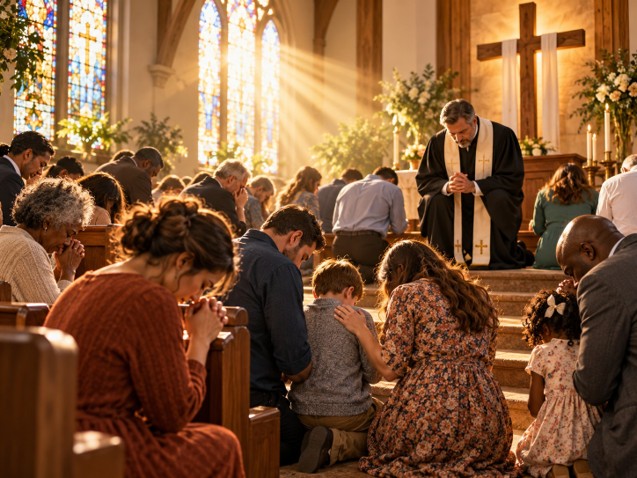
A Prayer for Forgiveness
Heavenly Father,
We come before You today not to point out the sins of others, but to confess our own.
Forgive us, Lord, for the times we’ve been quick to judge and slow to love.
Forgive us for every person we’ve made feel unwelcome, unworthy, or beyond the reach of Your grace.
Forgive us when we’ve used Your Word as a weapon instead of allowing it first to correct our own hearts.
Forgive the church wherever we have represented condemnation more clearly than the love of Jesus Christ.
Lord, help us remove the beam from our own eyes.
Teach us to stand firm in truth without pride, to offer correction without cruelty, and to extend mercy without hypocrisy.
Give us the courage to ask forgiveness from those we’ve hurt. Give us the humility to listen when they tell us about their pain.
And help every person who has been turned away by Christians understand that Your invitation to come to Jesus is still open.
May our churches become places where people encounter Your truth, Your mercy, and Your love. In the name of Jesus Christ,
Amen.
One Final Question
Before we point at the gay community, the adulterer, the person struggling with addiction, or anybody else whose sins are easier to recognize than our own, perhaps we should remember the words of Jesus:
“Thou hypocrite, first cast out the beam out of thine own eye.” — Matthew 7:5 (KJV)
And then remember His commandment:
“Thou shalt love thy neighbour as thyself.” — Mark 12:31 (KJV)
The church does not need less truth. It needs truth spoken with humility, mercy, and love.
Because the question isn’t simply whether the world can see the sins of others. The question is whether the world can see Jesus in us.