An invitation to examine our traditions through God’s Word.
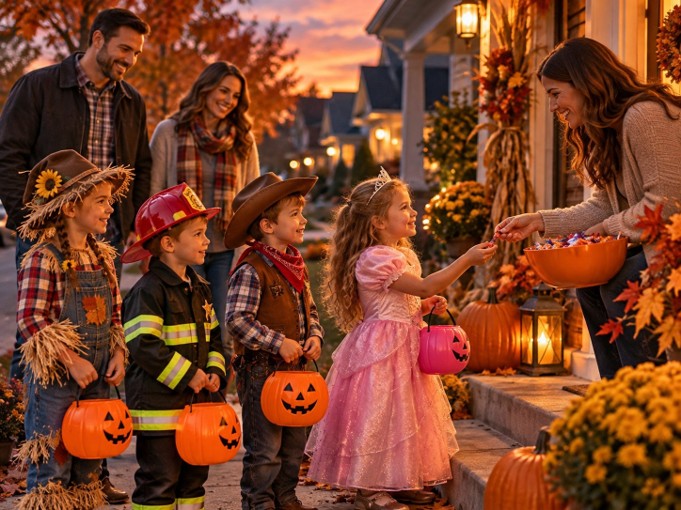
Every October, we see children dressed as princesses, superheroes, firefighters, and cowboys, excited about collecting candy and spending an evening with their families.
To most parents, it’s harmless fun. And perhaps that’s exactly how they intend it.
But as Christians, shouldn’t we sometimes look beyond our intentions and ask a deeper question?
Are we teaching our children to recognize evil, or are we teaching them to become comfortable with it?
This isn’t about condemning parents, criticizing children, or questioning anyone’s love for God. It’s about something far more important: examining the traditions we’ve accepted and considering where they may lead.
It’s Not How Halloween Started. It’s What It Has Become.
We can spend hours debating Halloween’s origins, ancient customs, and how the holiday developed. But perhaps we’re overlooking the more important question.
What are we celebrating today?
Look at some of the costumes, decorations, movies, and entertainment associated with modern Halloween. Images of death, violence, demons, and darkness have become common forms of entertainment.
Not everyone who participates in Halloween embraces evil. Many families simply enjoy costumes and candy.
But does calling something entertainment automatically make it spiritually harmless?
Ephesians 5:11 (KJV) tells us:
“And have no fellowship with the unfruitful works of darkness, but rather reprove them.”
As Christians, shouldn’t we at least stop and consider what we’re allowing ourselves and our children to become comfortable with?
When Traditions Become More Important Than God’s Word
Jesus addressed the danger of traditions taking precedence over God’s commandments.
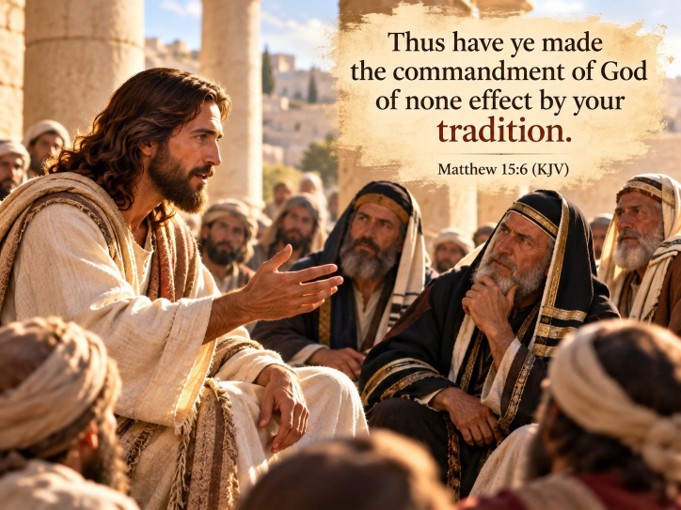
Matthew 15:6 (KJV):
“Thus have ye made the commandment of God of none effect by your tradition.”
Jesus was confronting religious leaders who allowed human traditions to interfere with obedience to God. That warning deserves our attention today.
Consider Christmas. We celebrate the birth of Jesus, but how often does Santa Claus become the center of attention?
Consider Easter. We celebrate the resurrection of our Savior, yet how easily can Easter eggs, baskets, and bunnies overshadow its true meaning?
These traditions are not automatically acts of evil. The concern is what happens when we allow anything to replace our focus on Jesus Christ.
The First Commandment makes God’s expectations clear.
Exodus 20:3 (KJV):
“Thou shalt have no other gods before me.”
Something doesn’t have to be called a god to become more important in our lives than God Himself.
Consider the Road We’re Teaching Our Children to Travel
Let’s consider something many parents may never have thought about. It begins innocently enough.
A little girl dresses as a princess. Her brother dresses as a cowboy. They go trick-or-treating, collect candy, and have a wonderful evening.
A few years pass.
Now they’re teenagers. Halloween may mean parties with friends, more frightening costumes, peer pressure, and sometimes alcohol or drugs.

A few more years pass.
Now they’re in college, where some parties involve even greater pressure to participate in activities that conflict with the values they were taught growing up.
Does every child follow this path? Absolutely not.
Does Halloween automatically lead someone into alcohol, drugs, or occult practices? No. But here’s the question worth considering:
Could repeatedly presenting certain things as harmless entertainment make it easier for some young people to overlook their dangers later?
The Bible warns in 1 Corinthians 5:6 (KJV):
“Know ye not that a little leaven leaveneth the whole lump?”
Paul was addressing tolerated sin within the church, but the warning also reminds us to take compromise seriously.
We teach children to look both ways before crossing the street because we understand the danger ahead.
Shouldn’t we be equally thoughtful about the spiritual influences we introduce into their lives?
Exposure Doesn’t Guarantee the Outcome
Here’s something else we must remember.
Just because we expose children to evil doesn’t mean they’ll become evil. But the opposite is also true.
Just because we raise children in church doesn’t guarantee they’ll become Christians.
We can teach them Scripture, take them to Sunday school, and surround them with Christian values. Eventually, however, they must make their own decisions about following Jesus.
Our responsibility as parents and grandparents is not to control every decision our children will ever make.
It’s to help establish a foundation that teaches them to recognize right from wrong, seek God’s wisdom, and make thoughtful choices.
That’s why our example matters so much.
Children notice what we celebrate, what we excuse, what we laugh about, and what we consider acceptable.
The Danger of Distraction
From a Christian perspective, spiritual temptation isn’t always obvious.
Satan doesn’t have to convince us to stop believing in God if he can tempt us to place something else ahead of Him.
And distractions don’t always look evil.
Sometimes they’re enjoyable traditions, familiar customs, or activities we’ve never thought to question.
Proverbs 3:5–6 (KJV) reminds us:
“Trust in the LORD with all thine heart; and lean not unto thine own understanding. In all thy ways acknowledge him, and he shall direct thy paths.”
Notice those words: “In all thy ways acknowledge him.”
Not just on Sunday.
Not just when we’re praying.
Not just when life becomes difficult.
In everything we do.
That includes the traditions we choose to celebrate and the examples we set for our children.
This Is About Discernment, Not Condemnation
Some Christian families celebrate Halloween. Others choose not to participate at all. The purpose of this article isn’t to declare one family righteous and another unrighteous. Nor is it to suggest that every child wearing a costume is embracing evil.
It’s simply an invitation to think. Perhaps we should ask ourselves:
- What am I teaching my children through the traditions we celebrate?
- Am I helping them recognize what is good and what may be harmful?
- Have I allowed something familiar to become more important than God’s Word?
- Would my choices reflect the faith I want my children to carry into adulthood?
1 Corinthians 10:31 (KJV) gives us a principle worth remembering:
“Whether therefore ye eat, or drink, or whatsoever ye do, do all to the glory of God.”
That’s a standard worth considering in every area of life.
One Final Thought
God never asked us to follow the world simply because everyone else was doing something. He asked us to follow Him.
We don’t have to condemn others to examine our own hearts. We don’t have to live in fear to practice discernment. And we don’t have to abandon kindness to stand firm in our faith.
Our children won’t always be little. Someday they’ll make decisions without us standing beside them. What lessons will they carry with them?
What will they remember about the things we taught them to accept?
And most importantly, will they know to seek God’s wisdom when making their own choices? Before we ask whether a tradition is harmless, perhaps we should ask whether it glorifies God.
Halloween: Are we teaching our children to recognize evil, or are we teaching them to become comfortable with it?
The question isn’t meant to condemn anyone. It’s meant to make us think.

Living Holly Ranch & Nursery
Rooted in Faith • John 3:16