Rooted in Faith
When most Christians hear the words Lord's Supper or Communion, they picture a small piece of bread and a sip from a cup. We remember the body and blood of Jesus Christ, just as He instructed His disciples.
But what if we have shortened the picture so much that we no longer see everything God was teaching through it?
Jesus did not introduce the Lord's Supper in a vacuum. He did it at Passover. To understand what Jesus was showing His disciples that night, we should therefore begin where Passover began – not in the New Testament, but in Exodus 12.
Once we do that, the Lord's Supper becomes part of a much larger story: a spotless lamb, sacrifice, blood, judgment, deliverance, food, readiness, remembrance – and ultimately Jesus Christ.
The First Passover
Israel was enslaved in Egypt. God was preparing to bring His people out, and the final judgment upon Egypt would be the death of the firstborn.
Before that judgment came, God gave Israel very specific instructions.
Each household was to take a lamb. But it could not be just any lamb:
"Your lamb shall be without blemish, a male of the first year." – Exodus 12:5 KJV
The lamb was then to be killed.
But killing the lamb was not the end of what God commanded.
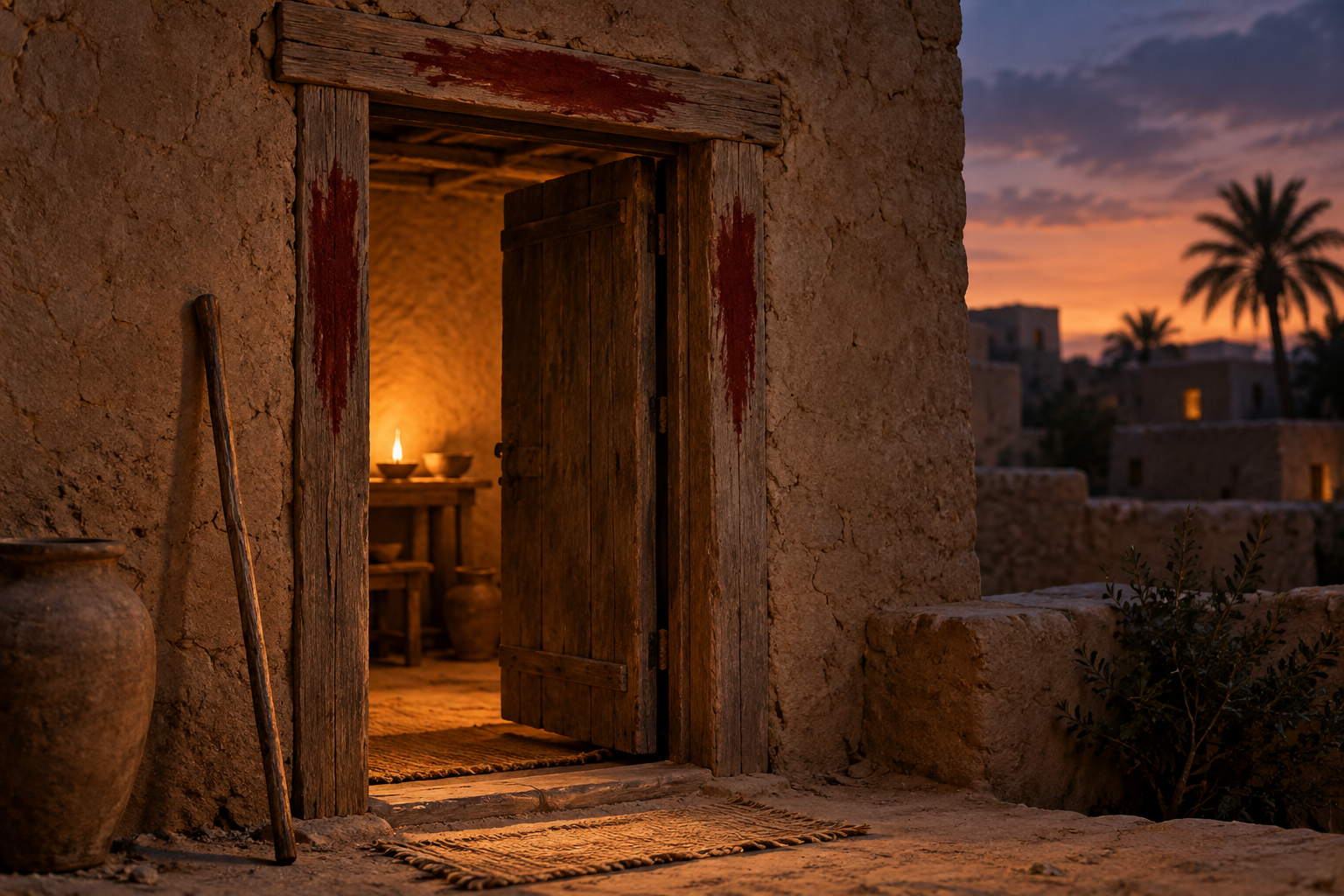
The blood had to be taken and placed upon the two side posts and the upper doorpost of the house.
God said:
"When I see the blood, I will pass over you." – Exodus 12:13
The lamb had been sacrificed, but the blood also had to be applied where God commanded.
Already we can begin to understand why the New Testament calls Jesus:
"The Lamb of God, which taketh away the sin of the world." – John 1:29
Peter likewise describes Christ as:
"A lamb without blemish and without spot." – 1 Peter 1:19
And Paul removes any doubt that Christians are supposed to see a connection between Passover and Christ:
"For even Christ our passover is sacrificed for us." – 1 Corinthians 5:7
But there is more to Passover than the lamb being killed and its blood being applied.
They had to eat the lamb.
Why Did They Eat the Lamb?
God commanded:
"And they shall eat the flesh in that night, roast with fire, and unleavened bread; and with bitter herbs they shall eat it." – Exodus 12:8
The Passover lamb was not simply something Israel watched die.
It became their meal.
They were to take nourishment from the very lamb whose blood marked the house from which judgment would pass.
That becomes especially interesting when we listen to Jesus centuries later.
Jesus said:
"I am the bread of life." – John 6:35
And later:
"I am the living bread which came down from heaven." – John 6:51
Then He used even stronger language:
"Except ye eat the flesh of the Son of man, and drink his blood, ye have no life in you." – John 6:53
Christians have disagreed for centuries over exactly how those words relate to Communion and Christ's presence. We should acknowledge those differences rather than pretending the passage settles every theological question by itself.
But something important can still be seen.
When Jesus speaks about eating, bread, flesh, blood and life, He is speaking within a biblical story in which God's people had once been commanded to eat the Passover lamb.
And Jesus is the one Paul calls "Christ our passover."
Bread Is More Than Food
There is another connection.
When Satan tempted Jesus to turn stones into bread, Jesus answered:
"Man shall not live by bread alone, but by every word that proceedeth out of the mouth of God." – Matthew 4:4
Jesus was quoting Deuteronomy 8:3.
Physical bread keeps the body alive, but God's Word sustains something physical food cannot.
Then consider how John introduces Jesus:
"In the beginning was the Word, and the Word was with God, and the Word was God." – John 1:1
And:
"And the Word was made flesh, and dwelt among us." – John 1:14
Jesus is called the Word.
Jesus calls Himself the bread of life.
And at Passover, God's people were commanded to eat the lamb.
Exodus itself does not explicitly say that eating the lamb symbolized eating God's Word. That connection is a typological reading that emerges when these later Scriptures are placed alongside Exodus. But the parallels deserve to be considered rather than hurried past.
Something similar happens in Jesus' conversation with the Samaritan woman.
She came to Jacob's well for physical water. Jesus told her:
"Whosoever drinketh of the water that I shall give him shall never thirst." – John 4:14
She initially thought He was talking about ordinary water.
Later the disciples encouraged Jesus to eat. Jesus answered:
"I have meat to eat that ye know not of." – John 4:32
The disciples wondered whether somebody had brought Him food.
Jesus explained:
"My meat is to do the will of him that sent me, and to finish his work." – John 4:34
Jesus repeatedly used ordinary physical necessities – water, bread and food – to teach spiritual realities.
That makes the command to eat the Passover lamb worth thinking about deeply.
The Unleavened Bread
The Passover meal also included unleavened bread.
It contained no leaven.
Paul later uses leaven as an illustration of corruption:
"Know ye not that a little leaven leaveneth the whole lump?" – 1 Corinthians 5:6
Then notice what immediately follows:
"Purge out therefore the old leaven… For even Christ our passover is sacrificed for us." – 1 Corinthians 5:7
Paul continues:
"Therefore let us keep the feast… with the unleavened bread of sincerity and truth." – 1 Corinthians 5:8
Leaven does not symbolize sin everywhere in Scripture; Jesus can use leaven positively to describe the spreading kingdom of heaven (Matthew 13:33). But in 1 Corinthians 5, Paul's meaning is explicit: he contrasts the leaven of malice and wickedness with sincerity and truth.
Now return to the Last Supper.
Jesus takes the Passover bread and says:
"This is my body which is given for you: this do in remembrance of me." – Luke 22:19
The bread associated with Passover was unleavened.
And Christ Himself was without sin.
Hebrews 4:15 says He was:
"Yet without sin."
Peter says:
"Who did no sin." – 1 Peter 2:22
Again we encounter the same picture: the unblemished lamb and the sinless Christ.
They Ate Passover Ready to Leave
There is another part of the original Passover that is easily overlooked.
God told Israel exactly how to eat the meal:
"With your loins girded, your shoes on your feet, and your staff in your hand; and ye shall eat it in haste." – Exodus 12:11
Why?
Because they were leaving.
They were not supposed to eat as though Egypt remained their permanent home. Their clothes were ready for travel. Their shoes were on. Their staffs were in their hands.
They ate their Passover prepared for deliverance.
Now listen to Jesus:
"Let your loins be girded about, and your lights burning." – Luke 12:35
And only a few verses later:
"Be ye therefore ready also: for the Son of man cometh at an hour when ye think not." – Luke 12:40
Jesus similarly says:
"Watch therefore: for ye know not what hour your Lord doth come." – Matthew 24:42
The first Passover was eaten by people ready to leave.
Christ tells His followers to live ready for His coming.
That becomes particularly meaningful when we read Paul's description of the Lord's Supper:
"For as often as ye eat this bread, and drink this cup, ye do shew the Lord's death till he come." – 1 Corinthians 11:26
The Lord's Supper therefore looks in two directions.
We look backward and remember Christ's sacrifice.
But we also look forward:
"Till he come."
Passover Was a Memorial Meal
God didn't command Israel merely to remember Passover privately.
He said:
"And this day shall be unto you for a memorial; and ye shall keep it a feast to the LORD throughout your generations." – Exodus 12:14
It was a memorial feast.
That matters when we arrive at Jesus' final Passover with His disciples.
Jesus said:
"With desire I have desired to eat this passover with you before I suffer." – Luke 22:15
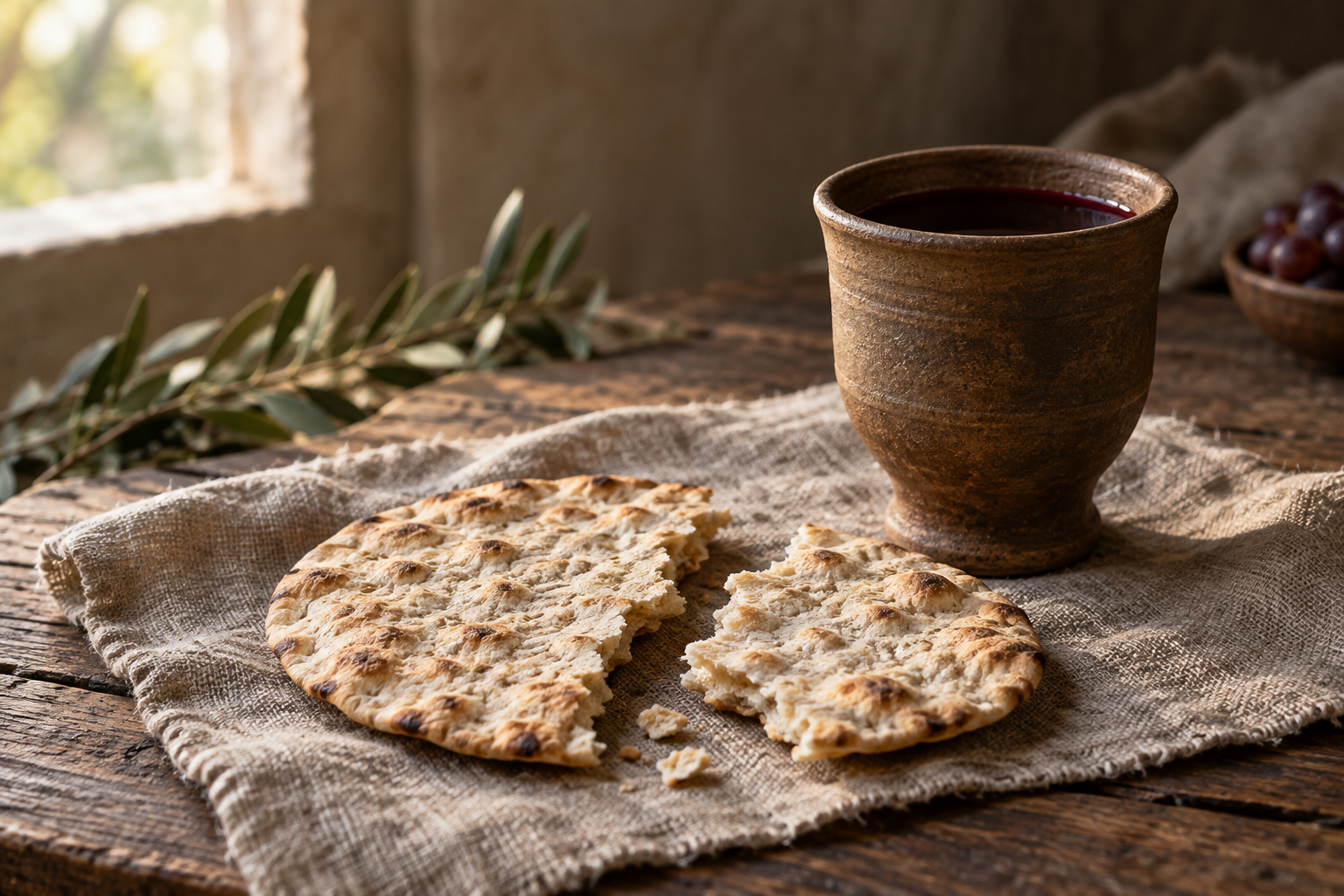
During that meal He took bread, gave thanks, broke it and gave it to His disciples:
"This is my body which is given for you: this do in remembrance of me." – Luke 22:19
Then Luke makes an easily overlooked statement:
"Likewise also the cup after supper…" – Luke 22:20
After supper.
Paul preserves the same detail:
"After the same manner also he took the cup, when he had supped…" – 1 Corinthians 11:25
Jesus' bread and cup weren't introduced without a surrounding context.
There was a meal.
There was Passover.
What Does "Breaking Bread" Mean?
The Bible can use breaking bread simply for eating together.
Acts 2:46 describes the early believers:
"Breaking bread from house to house, did eat their meat with gladness and singleness of heart."
Acts 27 gives another example. Paul took bread aboard ship, gave thanks, broke it and began to eat (Acts 27:35). The setting there is plainly an ordinary meal rather than a church Communion service.
Therefore, every biblical reference to "breaking bread" should not automatically be reduced to the later ceremonial form of Communion. Context matters.
And that raises an important question about the Lord's Supper itself.
Have We Reduced a Feast to a Cracker and a Sip?
Many Christians today remember Jesus with a small piece of bread or cracker and a small amount of wine or grape juice.
Those elements certainly preserve something Jesus explicitly commanded us to remember: His body and His blood.
But we should ask whether something can be lost when the surrounding Passover story is forgotten.
The question isn't whether bread and the cup matter.
Of course they matter.
The question is whether they were ever intended to tell the entire story by themselves.
At the first Passover there was an unblemished lamb, sacrifice, applied blood, eating, unleavened bread, deliverance, fellowship, remembrance and readiness.
At Jesus' final Passover He deliberately placed His own body and blood within that ancient story.
And Paul later writes:
"For even Christ our passover is sacrificed for us: Therefore let us keep the feast…" – 1 Corinthians 5:7-8
Paul immediately explains "keeping the feast" in moral and spiritual terms – rejecting the leaven of malice and wickedness and living in sincerity and truth. So that passage by itself should not be turned into a command that every Christian must reproduce every regulation of Exodus 12.
But neither should we throw Exodus 12 away.
Without Passover, we lose much of the vocabulary that explains what Jesus was doing.
The Cross Was Not the End of the Story
This same principle helps us understand Christ's death and resurrection.
Under the Old Testament sacrificial system, killing the sacrifice wasn't necessarily the final action. In prescribed offerings the priest handled and presented the blood as God commanded before the text announced:
"And the priest shall make an atonement for him… and it shall be forgiven him." – Leviticus 4:26
Leviticus 17:11 explains:
"It is the blood that maketh an atonement for the soul."
The New Testament then presents Jesus not merely as the sacrifice but also as our High Priest.
Hebrews says Christ entered:
"By his own blood… having obtained eternal redemption for us." – Hebrews 9:12
And:
"Christ is not entered into the holy places made with hands… but into heaven itself, now to appear in the presence of God for us." – Hebrews 9:24
Christ's crucifixion therefore cannot be separated from His resurrection.
Paul says it plainly:
"If Christ be not raised, your faith is vain; ye are yet in your sins." – 1 Corinthians 15:17
And he summarizes the gospel:
"Christ died for our sins according to the scriptures; And that he was buried, and that he rose again the third day according to the scriptures." – 1 Corinthians 15:3-4
The cross matters enormously.
But the story doesn't end at the cross.
The Lamb who was slain lives.
Start at the Beginning
Perhaps one reason we sometimes struggle to understand the Lord's Supper is that we begin too late in the Bible.
We start with a piece of bread and a cup.
Start instead in Egypt.
See a people in bondage.
See the spotless lamb.
See the sacrifice.
See the blood applied.
See judgment pass over.
See the people eat the lamb.
See the unleavened bread.
See them standing with shoes on their feet and staffs in their hands, ready to leave.
See God deliver them.
See Him command them to remember it.
Then follow that story forward.
Hear John say:
"Behold the Lamb of God."
Hear Jesus say:
"I am the bread of life."
Hear Him take the Passover bread:
"This is my body."
Hear Him take the cup after supper:
"This cup is the new testament in my blood."
Hear Paul say:
"Christ our passover is sacrificed for us."
And finally:
"Ye do shew the Lord's death till he come."
Passover isn't merely an interesting Old Testament Jewish custom sitting in the background of Christianity.
It provides much of the language and imagery through which the New Testament presents Jesus Christ, His sacrifice, His blood, deliverance, spiritual nourishment, remembrance and readiness for His return.
A piece of bread and a cup can remind us of Christ.
But understanding Passover can help us understand why they are there.
And once we see the whole picture, the Lord's Supper becomes more than a ritual we perform.
It tells a story – from bondage to deliverance, from the lamb that was slain to the Lamb who lives, and from remembering what Christ has done to waiting ready for what He has promised to do.
"For even Christ our passover is sacrificed for us." – 1 Corinthians 5:7
"…till he come." – 1 Corinthians 11:26
Read next: The First and Last Miracles: What Was Jesus Showing Us?
Stay Rooted in Faith with Living Holly
Enjoyed this reflection? Join the Living Holly Garden List to stay in touch with us for faith, family, gardening, and everyday life.