Cold weather does not have to end your gardening. A few pots, a suitable LED light, and a timer can help you keep herbs growing for the kitchen or give houseplants the light they are missing. Start with a small space you can check easily every day.
Choose what you want to grow
Our suggestion for a first indoor garden is three pots of herbs you already use in meals. A pot of chives means something fresh for baked potatoes. Basil brings flavor to pasta, and mint can go into tea. Choose the harvest you want, then provide the conditions that plant needs.
Houseplants and food crops have different needs. A plant that tolerates a dim corner is not a good model for growing kitchen herbs. Keeping a plant alive through winter also takes less light than producing lots of new leaves, flowers, or fruit. [1, 8]
What you need to get started
- A white or balanced-spectrum LED grow light sized to cover your pots.
- A sturdy stand or shelf with a way to adjust the lamp height.
- A timer, pots with drainage holes, a waterproof tray, and lightweight potting mix.
- Healthy plants or suitable seeds, plus room for air to move around them.
Use a table or shelf you already have. Set up away from drafts and heating vents, where the light will not bother you in the evening. Keep electrical connections dry and secure the fixture according to its instructions. [3, 4]
Why a sunny window may need help
A bright south- or west-facing window can help, but winter days are shorter. Trees, porch roofs, curtains, and nearby buildings can also reduce the light reaching your plants. Judge the spot by the plants you want to grow, not just by how bright the room looks to your eyes. [2]
Choosing a useful grow lamp
For a small home setup, we suggest a white LED grow bar that illuminates the whole tray. LEDs generally use electricity efficiently and produce less heat than older incandescent lamps. You do not need a purple glow to grow plants. White or balanced light can support many kinds of growth. [1, 3]
Check the manufacturer’s coverage area at its recommended mounting height. A small lamp may brighten one pot without supplying enough light to several pots spread across a shelf. Wattage tells you electricity use, not how much useful light reaches a leaf. If the maker provides a PPFD map, it shows plant-usable light across the growing area. [3]
Ordinary white LED fixtures can support some leafy growth when their output and placement are adequate. A ceiling bulb several feet away is a poor substitute for a lamp positioned over the plants. Buying something labeled “grow light” does not remove the need to check coverage and instructions. [1, 3]
How close should the light be
Start with the lamp manufacturer’s instructions for your plant and growth stage. There is no single safe distance for every LED fixture: a powerful panel and a small grow bar are very different.
For perspective, Maryland Extension says 6–12 inches above the foliage is typical for microgreens, depending on fixture intensity. That is an example for that crop, not a rule for every plant or lamp. Measure from the top leaves rather than from the tabletop, and adjust as plants grow. [5]
How many hours should it run
A practical starting schedule for many kitchen herbs is 14–16 hours of light daily. Many foliage houseplants can use 12–14 hours. Count the total light period from the window and lamp together, and give plants an uninterrupted dark period. A timer makes the routine easier. For example, 6 a.m. to 8 p.m. is 14 hours. [1, 2, 4]
Special flowering plants need different schedules. Christmas cactus and poinsettias need long nights to set buds; putting every plant under an herb schedule can interfere with flowering. [2]
Grandma grows flavor for the table
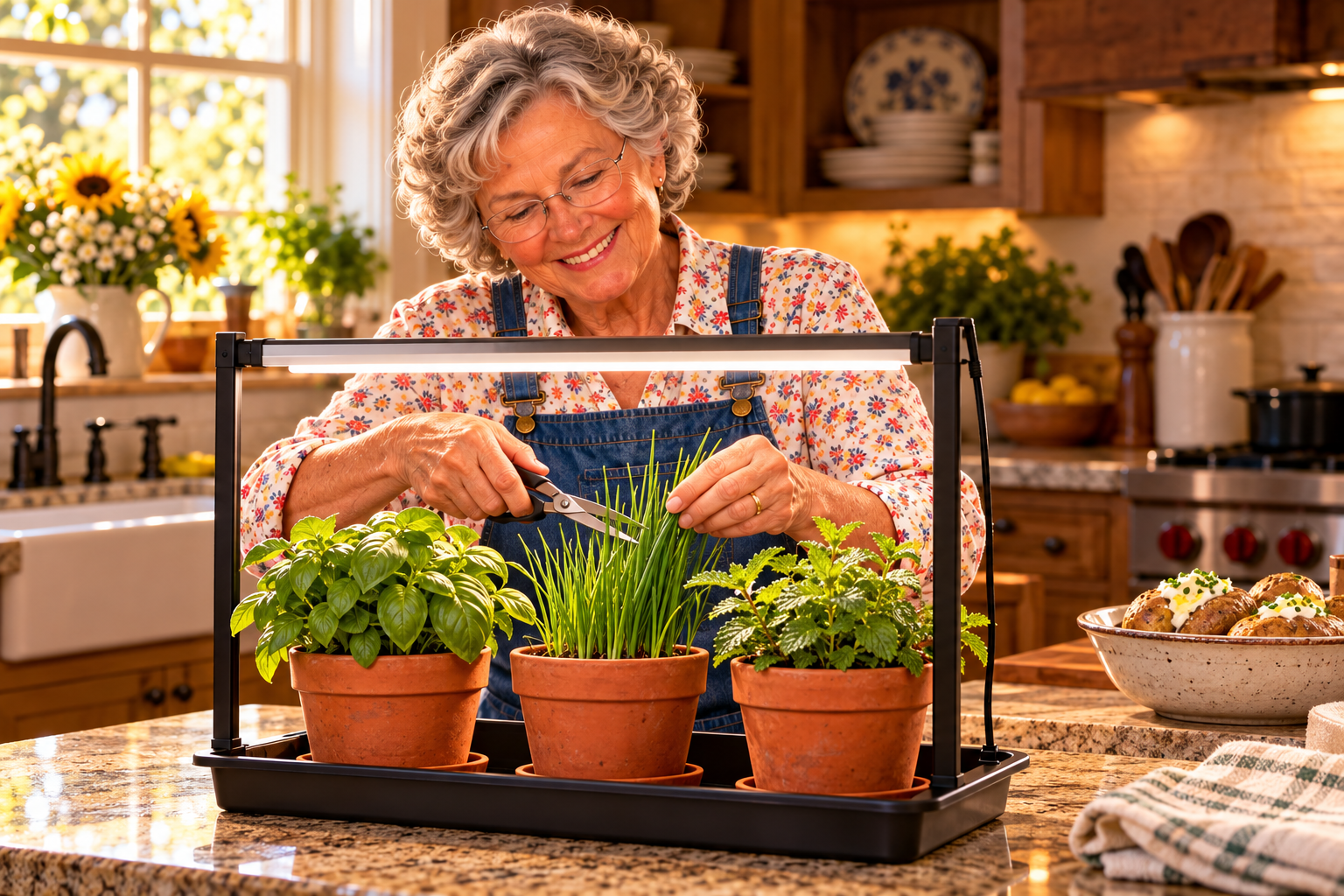
Pick a few herbs you enjoy and give each its own pot so you can adjust watering. Basil needs strong light; mint and chives are useful choices to try. Rosemary is worth keeping if you already have a healthy plant, but give it bright light and carefully managed moisture. Different herbs will not all respond the same way. [4]
For a quick food-growing project, try a shallow tray of radish, mustard, or broccoli microgreens. Maryland Extension lists 7–21 days as a typical microgreen harvest range, depending on the crop and conditions. Use seeds suitable for edible microgreens, and keep the mix moist without saturating it. [5]
Water according to the plant and pot
Do not bring your outdoor watering schedule indoors. Plants growing more slowly in lower light often use less water. Check the potting mix and the weight of the pot before watering; use the needs of that particular plant to decide when it is ready. [6]
Use containers that drain and a potting mix that stays airy. When an established herb needs water, water thoroughly and let excess drain away. Empty collected water so the pot does not remain soaking. Thyme, sage, and oregano need more drying between waterings than some other herbs. [4]
Leave space between pots. A gentle fan can improve air movement around a crowded tray of greens; do not blast plants with a drying wind. Covers used during germination need ventilation, and moisture should not stay trapped indefinitely. [5]
Before bringing outdoor plants inside
Prepare while weather is still mild. Some tropical plants suffer before a frost arrives, so check the plant’s cold tolerance and your local forecast. Inspect leaf undersides, stems, and pots for pests. Where practical, ease plants into lower light before the move. [6]
Keep incoming plants separate from existing houseplants for about three weeks and continue checking them. Watch for sticky leaves, white cottony clusters, or insects. Rinsing or removing pests may help; any treatment must be appropriate for that plant and for edible crops if you plan to eat the leaves. [7]
Can you save a pepper plant
Sometimes. Decide whether your goal is to keep it alive for spring or harvest peppers indoors. Overwintering can involve a cool location, pruning, and limited watering. Winter fruit production needs warmth and sufficient artificial light, and flowers may need help with pollination. A small herb lamp does not guarantee a pepper harvest. [8]
Let the plants tell you what needs adjusting
- Long, thin growth or leaning can signal insufficient light. Check lamp coverage, height, and schedule. [2]
- Bleached or scorched leaves can signal excessive light. Check placement before moving the lamp closer. [1]
- Slow growth after an outdoor-to-indoor move can reflect the change in conditions. Check moisture before adding more water. [6]
- Persistent insects deserve attention before the problem spreads to neighboring plants. [7]
What Grandma and Grandpa used
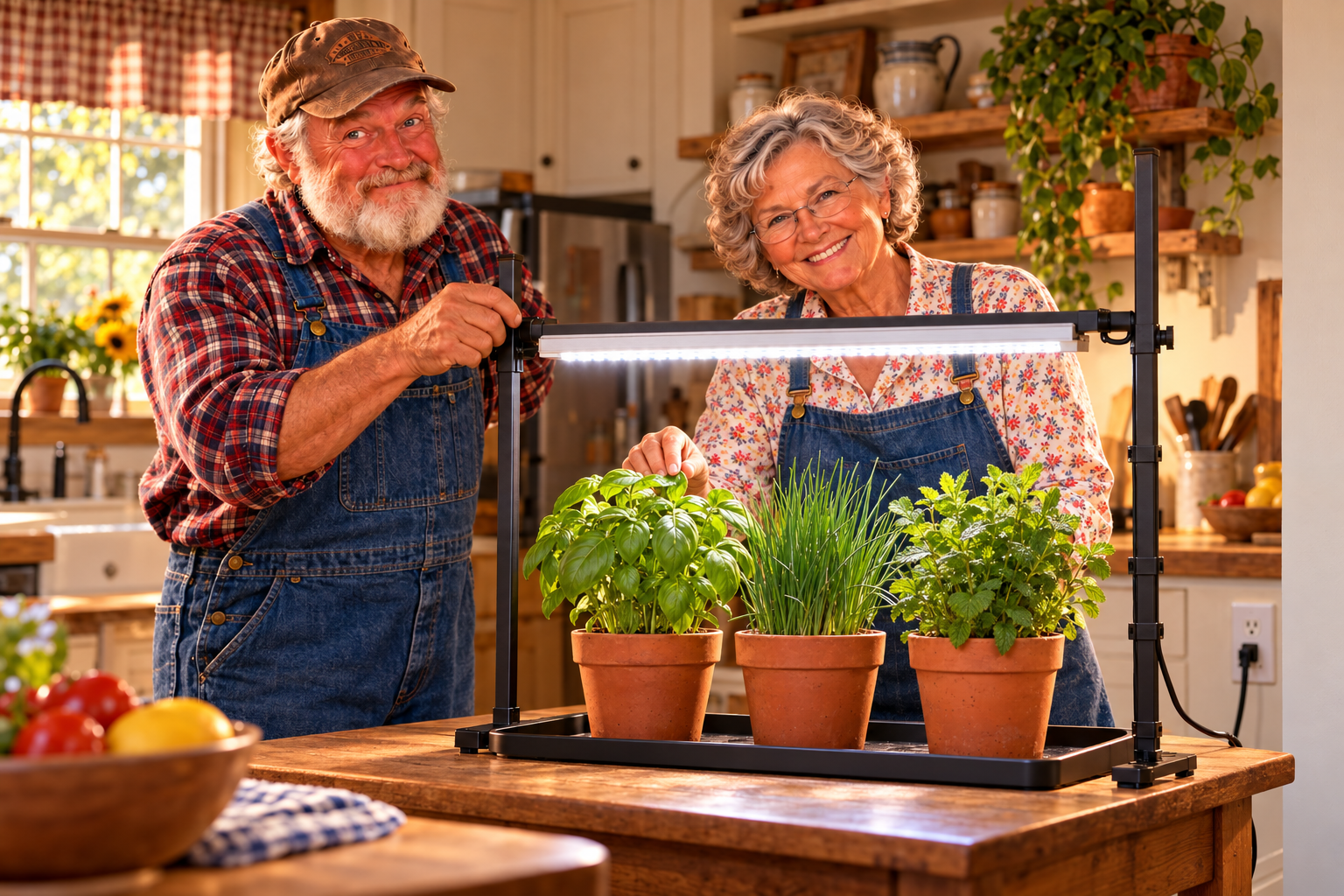
The pictured setup illustrates a modest adjustable LED bar, a sturdy stand, three separate herb pots, and a tray. Add a timer and suitable potting mix to make the routine manageable. Choose equipment by how well it fits your plants and space.
Start small enough to enjoy it. If those first few pots give you fresh flavor for supper and keep you gardening through winter, you have already accomplished something useful.
Follow Living Holly Ranch & Nursery for practical garden help, and visit LivingHolly.com. Rooted in Faith, John 3:16.
Sources
- University of Minnesota Extension — Lighting for indoor plants and starting seeds
- University of Maryland Extension — Lighting for Indoor Plants
- Maryland Grows — Indoor lighting options
- University of Maryland Extension — Growing Herbs in Containers and Indoors
- University of Maryland Extension — Growing Microgreens and Baby Greens Indoors
- Penn State Extension — Before the First Frost
- Penn State Extension — Pest and Disease Problems of Indoor Plants
- Ask Extension — Overwintering peppers and herbs
Leave a Reply